
Know which associations you belong to
Most Reston properties are covered by Reston Association. Many townhouses also belong to a cluster association, and condo units belong to a condominium association that manages the building. Each can have a say in different parts of a remodel. Interior bathroom work mostly falls under the condo or cluster rules; exterior changes go through Reston Association's Design Review Board or Covenants staff.
Questions to ask your association before you hire
Rules differ from building to building, so get them in writing early. These are the questions we suggest asking your condo association, management company or cluster board:
- Does the association need to approve a bathroom remodel before work starts, and what does the application include?
- Does it require contractors to provide a certificate of insurance, and naming whom?
- What are the allowed work hours and days, especially for noisy work like tile removal?
- Is there an elevator to reserve or protect, and a loading area to use?
- Where can contractors park, and where can a debris container or trailer go?
- Which pipes, drains and vents belong to the unit, and which are common elements?
- Are there rules about flooring underlayment for sound?
We will supply the documents an association asks for. Having the answers before scheduling avoids a crew showing up to a locked loading dock.
Shared plumbing and what can move
Bathrooms in condos and many townhouses stack above one another, sharing a drain stack and sometimes a vent. A fixture can usually move only as far as the drain slope allows back to that stack. In a condo, the stack itself is often a common element you cannot alter without the association. In a wood-framed townhouse, joist direction decides which way a drain can run.
That is why we open the conversation with layout limits, not tile samples. Knowing what can move keeps the design realistic.
Party walls and floors
A wall shared with a neighbor is also a fire and sound separation. We avoid cutting into it for niches or recessed cabinets unless the assembly allows it. On upper floors, waterproofing is critical, since a leak shows up in the unit below, and quiet hard flooring may need an underlayment your association specifies.
Permits: house versus condo
Fairfax County's residential alteration permits cover townhouses up to three stories. Its permit library says condos and apartment buildings are considered commercial under the building code and need commercial building permits instead. That changes the paperwork, so it is worth confirming early. Our Fairfax County permits guide has more detail.
Ventilation in attached homes
Many condo and townhouse bathrooms are interior rooms without windows. The fan has to vent outdoors, and in a condo the route may be a shared building duct. See our guide to exhaust in windowless bathrooms.
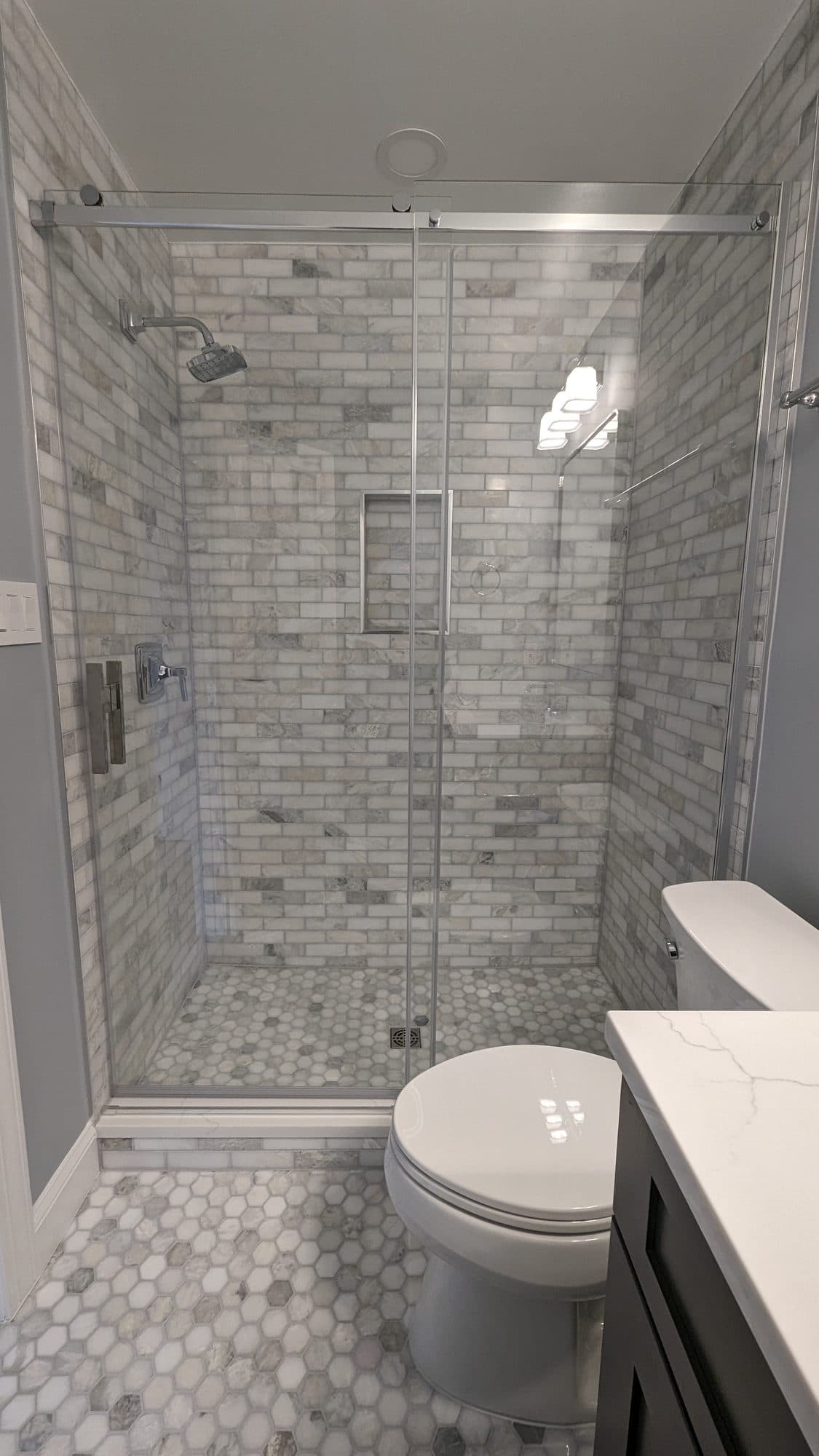
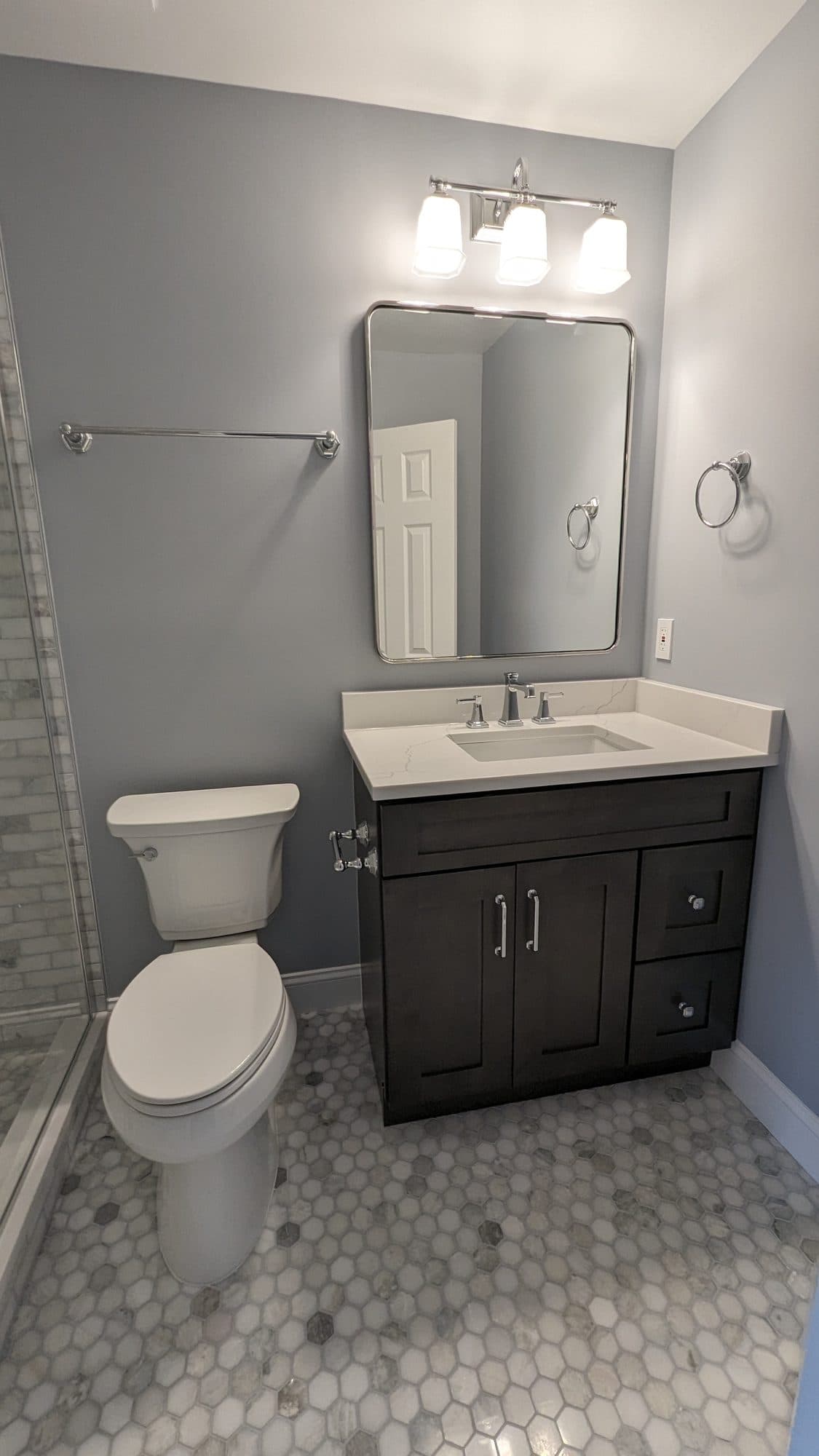
Our second Reston project, shown here, fit a frameless glass walk-in shower and a full vanity into a compact footprint.
A planning checklist for attached homes
- Read your condo declaration or cluster covenants for anything on renovations.
- Ask management for the current contractor rules in writing.
- Find your unit's water shutoff and ask which valves serve other units.
- Decide what the layout can and cannot move, given the drain stack.
- Confirm the permit path with us: residential for a townhouse, commercial for a condo.
- Tell the neighbor below you, if any, when work will happen.
None of this is unusual. It is simply more coordination than a detached house needs, and handling it before demolition keeps the project on track.
Do I need condo association approval to remodel my bathroom?▸
Many associations require notice or approval, especially when plumbing changes. Rules vary, so check your governing documents or ask management.
Will you provide a certificate of insurance to my association?▸
Yes. Kenney Construction is licensed, insured and bonded, and we provide the documentation an association requests.
Can I move my toilet in a condo?▸
Sometimes, within the limits of the floor structure and the common drain stack. We assess it before promising a new layout.
Does Reston Association care about my bathroom?▸
Generally only if something changes outside, like a new vent cap. Exterior changes go through RA's design review.