
Why people choose wall-hung fixtures
- The floor runs uninterrupted under the fixture, so a small bathroom feels bigger.
- Cleaning the floor is easier with nothing to work around.
- Heights can be set to suit the people using the room.
- The look fits contemporary and modernist homes.
Wall-hung vanities
A floating vanity is fastened to the wall, so the wall needs solid blocking between the studs at the right height. That blocking goes in while the wall is open. Drain and supply lines must also come out of the wall at heights that suit the cabinet, since there is no base to hide them.
Storage is the trade-off. A floating vanity usually holds less than a floor-standing one of the same width, so drawers and a recessed medicine cabinet become more important. In compact Reston condo baths, a shallow floating vanity can be a good balance.
Wall-hung toilets
A wall-hung toilet hides the tank inside the wall on a steel carrier frame, with the flush button on the wall. The carrier carries the weight to the floor, not the drywall. That needs wall depth: a standard thin wall usually has to be built out, which takes some floor space back. Planning an access point for the flush mechanism matters for future service.
Our published materials list includes Kohler and American Standard toilets. Specific wall-hung models and carriers are chosen during selection to match the wall and plumbing.
Condo and townhouse considerations
Wall-hung toilets often need the drain repositioned and a deeper wall. In a condo, that can run into common-element plumbing or a party wall you cannot alter, so check with your association and have us assess the wall first. In a townhouse, joist direction and the drain stack location decide what is practical.
Permits
Replacing a floor-mounted toilet with a wall-hung one usually involves moving the drain and building a new wall, which goes beyond a like-for-like replacement. Fairfax County generally requires permits for that kind of plumbing change.
Pairing with the rest of the room
Wall-hung fixtures look best with consistent floor tile running underneath and good lighting at floor level. Even something as simple as continuing the floor tile under a floating vanity makes the room read larger.
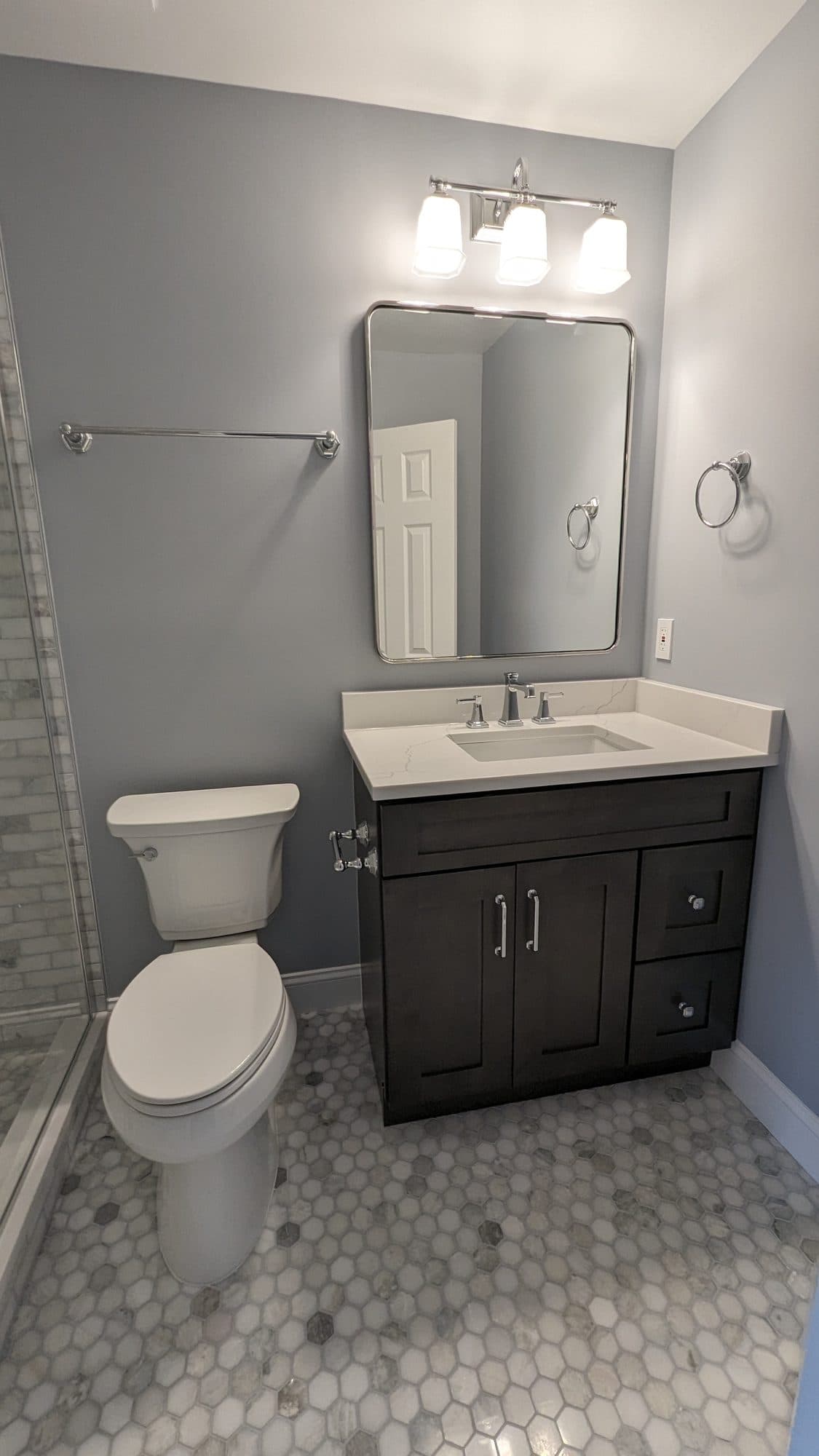
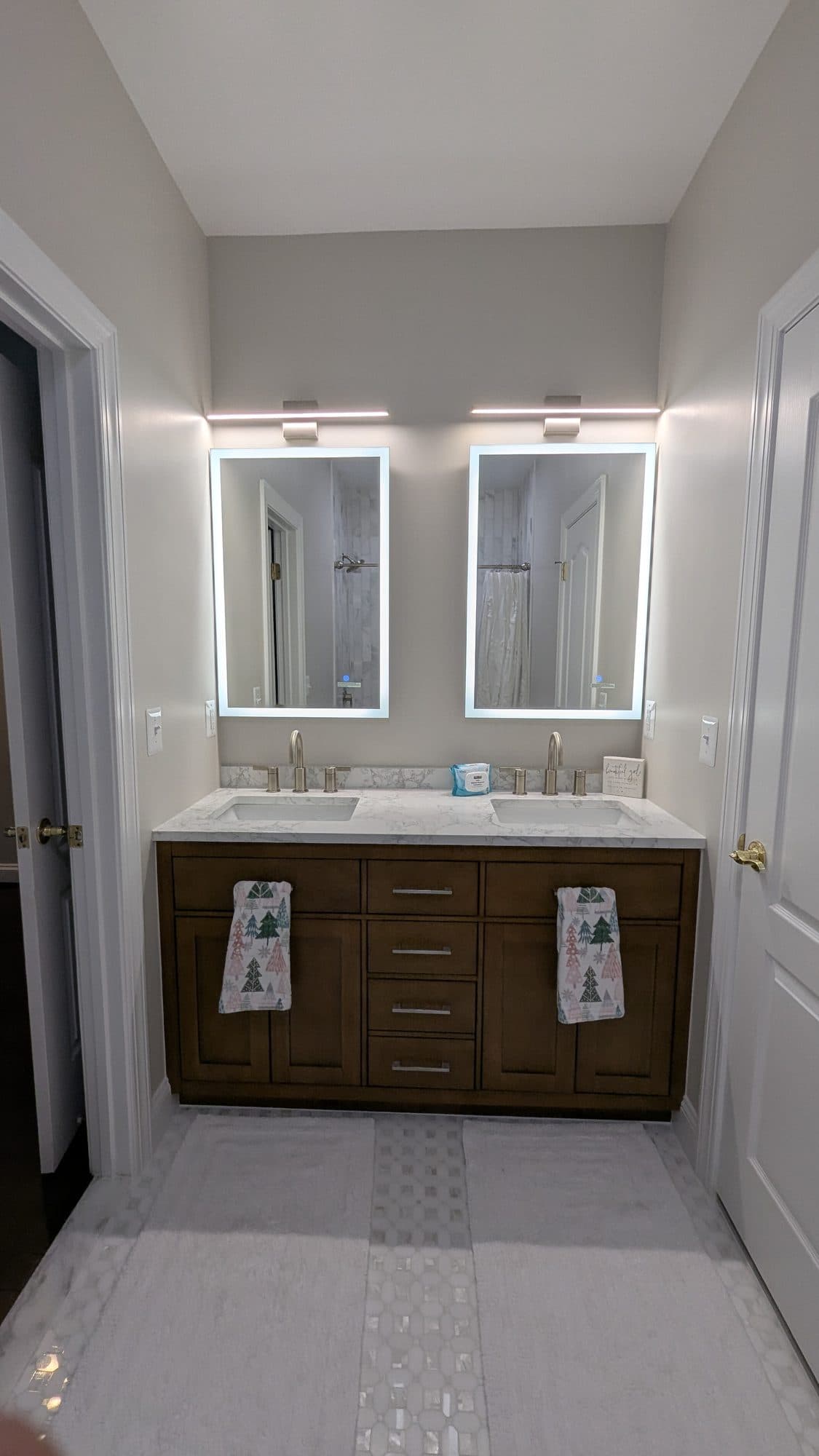
A Reston vanity (left) and an Ashburn double vanity (right), both floor-standing. Shown for proportion and finishes.
Deciding whether wall-hung is right for you
Wall-hung fixtures make the most sense when the wall is being opened anyway, the layout can accommodate a deeper wall, and you value the open floor and clean look. They make less sense in a quick update where the walls stay closed, or in a condo where the drain cannot move. We will tell you honestly which camp your bathroom is in.
A middle path is common: a floating vanity with a standard floor-mounted toilet. It gives much of the open-floor look without the carrier and wall build-out a wall-hung toilet needs.
Height, comfort and cleaning
One advantage of wall-hung fixtures is that height is a choice, not a given. A floating vanity can be set a little higher for tall users or lower for a child's bath. A wall-hung toilet's seat height is set by where the carrier mounts the bowl, which can suit someone who prefers a comfort-height seat. Decide these heights during design, since they are fixed once the wall is finished.
Cleaning is the benefit owners mention most. With no pedestal or toe kick, the floor can be mopped right to the wall, and there is no base where dust and moisture collect.
How much weight can a wall-hung toilet hold?▸
The load goes through the in-wall carrier to the floor. Carriers are rated by their manufacturers; we install to those specifications.
Is a wall-hung toilet hard to repair?▸
The flush mechanism is reached through the wall plate. Plan that access when the wall is built.
Can I add a floating vanity without opening the wall?▸
Usually not well. It needs solid blocking, which means opening the wall at least partly.